OH GOTT! - *ausverkauft* Stückeinführung 19:30 Uhr
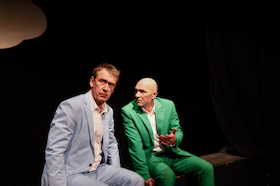
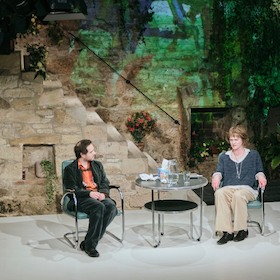
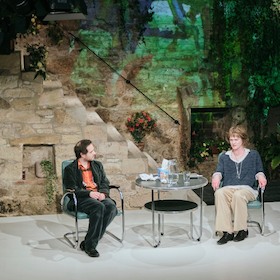
Ella, eine 42-jährige Psychologin, erhält einen mysteriösen Besuch. Der Besucher scheint ein Prominenter, ein hohes Tier beim Geheimdienst oder jemand ähnlich Bedeutsames zu sein, der seine Anonymität wahren will. Doch schon bald stellt sich heraus, dass es sich um keinen Geringeren als Gott persönlich handelt. Und damit nicht genug: Gott steckt in einer tiefen Depression und plant, seinem Leben – und damit auch seinem Werk – ein Ende zu setzen. Ella bleibt nur eine Stunde Zeit ihren inneren Konflikt mit Gott zu überwinden, seine Pläne zu ändern und somit die Welt zu retten.
Anat Gov hat mit OH GOTT ein vergnügliches, intelligentes und berührendes Theaterstück geschrieben. Gov gehört zu Israels bedeutendsten Autorinnen. Ihre Stücke feierten national wie international große Erfolge. OH GOTT wurde 2010 von der European Theatre Convention unter die „120 best Contemporary European Plays“ gewählt und in viele Sprachen übersetzt. Anat Gov starb im Dezember 2012 mit 58 Jahren. 2024 wurde OH GOTT am Landestheater Linz deutschsprachig erstaufgeführt.
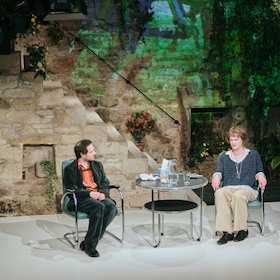
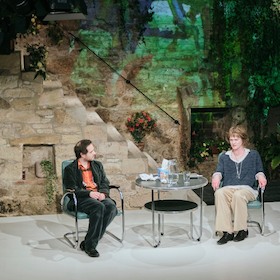
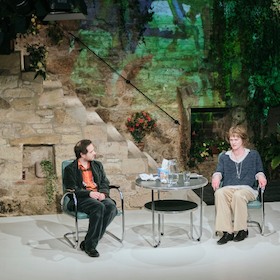
Es spielen Stefan Herrmann (Gott) und Jel Woschni (Ella).
Inszenierung: Thomas Bockelmann
Ausstattung: Ursina Zürcher
Bildgestaltung: Hermann Feuchter
Dramaturgie: Dr. Stefan Tigges
Szenenfotos: Tobias Kopp
Premiere 14. November 2025 um 20 Uhr, Einführung um 19.30 Uhr
Veranstaltungsort Gewölbe, Bursagasse 16
Dauer 75 min
Es gibt noch Karten für den 30. Mai; 5./6./18./19. Juni & 5./10./11./12. Juli. Am 12 Juli wird das Stück zum letzten Mal gespielt!
***************************
DAS SAGT DIE PRESSE
„Regisseur Thomas Bockelmann und seine Schauspieler entscheiden sich für Psycho-Witz mit Anspruch. Das Stück entfaltet sich auf dieser Basis tatsächlich am besten. […] der Text schlägt im weiteren Verlauf unter der Komödien-Oberfläche analytische Töne über das Verhältnis Mensch-Gott an. […] Jel Woschni als Ella und Stefan Herrmann als Gott schaffen in ihrem Therapie-Pas-de-Deux die Balance zwischen Comedy und Tiefgang. Auf der einen Seite natürlich die schnippisch bohrende Therapeutin und der überdrehte Choleriker am Rande des Nervenzusammenbruchs. Andererseits schaffen sie aber auch ruhige, reflektierte Momente, in denen das Psycho-Ping-Pong innehält und beide Darsteller die innige Verbindung Mensch-Gott auf die Bühne bringen.
Das Ende spendet jedenfalls Wärme: Gott fühlt sich gesehen, Ella sieht das Bild ihres Sohnes aufgezoomt als Bühnenillumination. Wenn Gott will, ein gutes Omen für die Zukunft des Zimmertheaters.“
Steffen Becker - nachtkritik
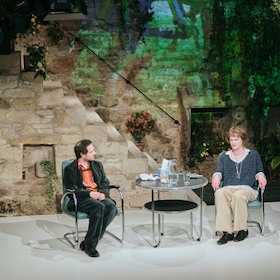
„Spritzige Dialoge, Wortwitz, überraschende Wendungen, Tiefgang und Relevanz. […] Das Timing stimmt, die Pointen sitzen, es wird gelacht im proppenvollen Theaterkeller. Die skurrile Situation, den Schöpfer der Welt in Behandlung zu haben, eröffnet die Chance für allerhand ironische Seitenhiebe. […] Der äußere Rahmen tut das seine dazu: Der Kellerraum verstärkt das Dichte, Abgeschlossene der Therapiesituation; die von oben herabführende Treppe im Hintergrund wird sinnig eingesetzt, um das Eindringen der höheren Macht zu verbildlichen – und Gottes zwischendurch aufkommende Fluchtpläne. […] So vergeht diese 70-minütige Therapiestunde wie im Flug.“
Armin Knauer - Reutlinger General-Anzeiger
„Aktualität hat es sicher nicht eingebüßt. Und die Inszenierung am Zimmertheater ist absolut sehenswert. […]
Das Stück reitet aber nicht auf den Gemeinplätzen plumper Religionskritik herum und ringt auch nicht angestrengt um die Theodizee-Frage. Es entspinnt sich in der Therapie-Situation vielmehr ein humorvolles und sehr kluges Gespräch. In dem klingen dann auch die grundsätzlichen Fragen an: Wie hätten wir unseren Gott denn gerne? Stark und mental fit, oder ist er uns labil nicht viel näher? Und, auch wenn wir einen stabilen Gott haben, der sich gehört fühlt, sind wir denn vor einer zweiten Sintflut gefeit? Wenn wir mit Gott über Gott reden, geht es am Ende doch wieder nur um uns.[…]
Jel Woschni ist eine glaubwürdige Therapeutin, die zwischen Unbehagen und Reiz an der Herausforderung wandelt. Es gibt viele selbstironische Momente, etwa beim Umgang mit Psychologen-Klischees oder wenn es um geläufige Gottesbilder geht, die zwangsläufig, auch wenn unser Gott dem nicht entspricht, im Raum sind. Ella redet sich in Rage, phasenweise verschwimmen Therapie und Abrechnung: „Mein Gott, werde endlich erwachsen!“, bricht es irgendwann aus ihr heraus. Stefan Herrmann spielt Gott als Figur, die zunächst zwischen Nervenbündel und Allmächtigem pendelt, sich immer mehr angreifbar und einsichtig zeigt, schließlich ziemlich glaubwürdig geläutert die Praxis verlässt. Reizvoll ist die Ambivalenz der Figur, die sehr menschliche Probleme umtreiben, die aber eben doch Gott ist und die jederzeit Möglichkeit hätte, mit dem Finger zu schnippen. Die Inszenierung hat eine hohe Geschwindigkeit: Die Therapie-Stunde dauert tatsächlich nur eine starke Stunde.“
Moritz Siebert - Schwäbisches Tagblatt
ausverkauft

 Hallo, ich bin Maya.