Japanisches Kulturfestival - Frühlingsgefühle mit dem Japanischen Kammerensemble, Leitung: So Matsukawa, Sopran: Aiko Bormann
3/21/2026
at 4:00 PM
/ Nauen OT Ribbeck
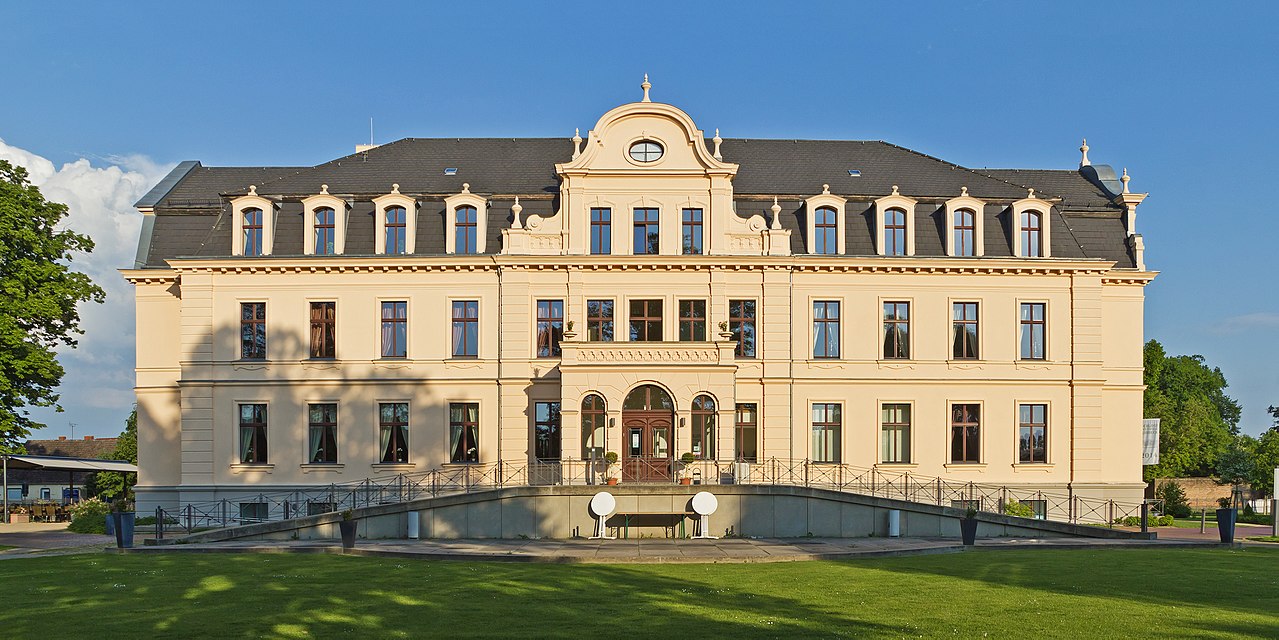
As part of the series "Anchor Points," the Havelländischen Musikfestspiele 2026 will host the first Japanese Culture Festival at Schloss Ribbeck. Two classical concerts featuring Japanese artists will take place on the penultimate weekend of March. The concerts will be complemented by a varied supporting program, which will be announced later. The historical and cultural ties between Japan and Germany are diverse and have a centuries-old tradition. On the Japanese side, there is a great fascination for German history, literature, music, landscapes, and customs, which is expressed in a variety of Japanese-German societies in Japan. On the German side, there is an equally great fascination for Japanese cuisine, (pop) culture, traditions, nature, and art, particularly among the younger generation, who pursue it with enthusiasm. The Japanese Culture Festival at the Havelländischen Musikfestspiele aims to connect these ties and make both cultures experienceable together.
"Spring Feelings" – A German-Japanese Dialogue at Schloss Ribbeck
Classical compositions between German tradition and Japanese harmony, works by Japanese and German composers: Berlin is a special place where German and Japanese musicians have been learning from each other, inspiring one another, and creating art together for generations. This concert features an ensemble of young professional artists from Japan who are currently studying or working in Berlin. The program focuses on two composers with a close connection to Germany: Felix Mendelssohn Bartholdy, who spent part of his youth in Berlin, composed works full of brilliance, elegance, and hopeful spring spirit at an early age. Kósçak Yamada, a pioneer of classical music in Japan, studied in Berlin from 1910 to 1913 and brought decisive impulses for the musical development of his homeland. The German-Japanese soprano Aiko Bormann, who grew up in Berlin, uniquely connects both cultures through her voice. The Japanese conductor So Matsukawa will take the musical lead and guide the audience with inspiring insights into the works, their backgrounds, and the cultural dialogue throughout the evening. The historic atmosphere of Schloss Ribbeck in Havelland – a place where history, nature, and art come together – provides the ideal setting for a musical new beginning. We warmly invite you to experience these "Spring Feelings" with us – a meeting of two cultures, carried by friendship, hope, and the joy of making music together, while the young artists themselves embark on new paths full of eagerness and curiosity.
Photo: So Matsukawa
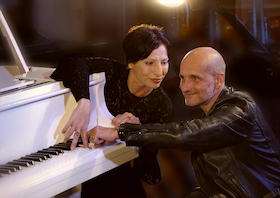
Aiko Bormann was born and raised in Berlin. Her repertoire ranges from songs to opera. She studied at the University of the Arts Berlin with Prof. Pesendorfer and Prof. Dr. Hulcup. Masterclasses with Thomas Hampson, Susan Manoff, Charles Spencer, and others also contributed to her artistic development. She has participated in renowned academies and festivals such as "Heidelberger Frühling" and "LIEDBasel." In 2026, she made her solo debut with Beethoven's 9th Symphony at the Berlin Philharmonie with the Berlin Symphony Orchestra.
So Matsukawa, born in 1992 in Tokyo, is a Japanese conductor residing in Berlin. After studying architecture at Tsukuba University, he continued his musical education at the Kyoto City University of Arts, where he graduated at the top of his conducting class and was awarded the Mayor's Prize of the City of Kyoto and the Prize of the Kyoto Music Society. He has distinguished himself in international competitions multiple times: in 2024, he won 1st prize at the BBCA Conducting Competition in Manchester and 2nd prize at the Constantin Silvestri International Conducting Competition in Bucharest. In 2023, he received 3rd prize at the Ionel Perlea International Conducting Competition in Romania. He gained significant practical experience as an assistant to Robin Ticciati: during the "Káťa Kabanová" production at Glyndebourne Festival Opera, in projects with the Deutsche Symphonie-Orchester Berlin – including "Tristan und Isolde" and Mahler's 2nd Symphony at the Philharmonie Berlin – and on the Japan tour of the London Philharmonic Orchestra.