Summerwinds Festival: Stefan Schilli, Kai Frömbergen, Bram van Sambeek, Ying Lai Green & Sergej Tcherepanov:
Glanz und Glühn – Abschlusskonzert
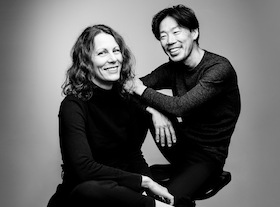
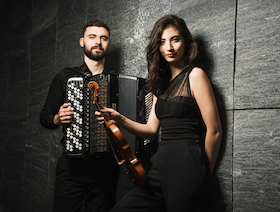
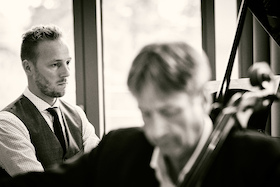
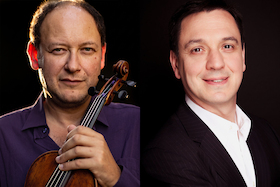
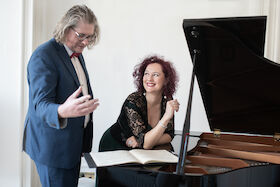
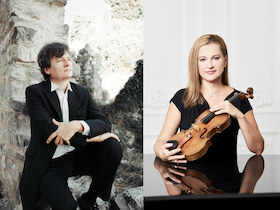
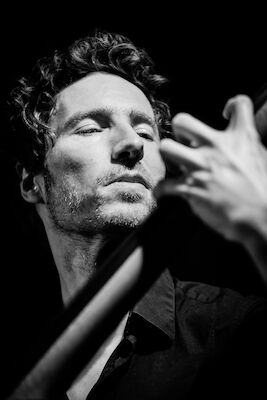
Stefan Schilli, Kai Frömbgen Oboe
Bram van Sambeek Fagott
Ying Lai Green Kontrabass
Sergej Tcherepanov Cembalo, Orgel
Barocke Kammermusik, gravitätisch, glänzend und glühend: Triosonaten als dramatische Kammerspiele, mit Oboen als Protagonistinnen. Das ist selten zu erleben – und exquisit, wenn zwei der angesehensten Oboist:innen Deutschlands, Kai Frömbgen und Stefan Schilli, die beiden Melodiestimmen spielen. Dritte Kraft im Ensemble ist der Generalbass, das harmonische und rhythmische Fundament, das Bram van Sambeek, Ying Lai Green und Sergej Tcherepanov legen, indem sie zu den vorgegebenen Basslinien improvisieren.
Der besondere Reiz der Triosonate: die beiden Oberstimmen sind gleichberechtigt und ständig in Dialog. Sie imitieren einander wie Echos, sind sich nah wie Frage und Antwort, Behauptung und Widerspruch; sie umkreisen einander, laufen parallel, verflechten und lösen sich, gehen wieder eigene Wege. Darunter der Bass, pulsierend oder ruhig, farbig und voll. Er hält die Solisten motorisch, trägt ihren Dialog oder greift kommentierend in das melodische Geschehen ein.
Glanz und Glühn: Jan Dismas Zelenkas Triosonaten gehören zu den allerschönsten überhaupt und zum Außergewöhnlichsten, was das europäische Barock zu bieten hat! Sie entstanden 1721/22 am Hof Augusts des Starken in Dresden, einem der damals bedeutendsten Musikzentren Europas. Dort gab es eine Hofkapelle mit Spitzenmusikern, wo auch Zelenka seit 1710 als Kontrabassist und Komponist angestellt war. Die Triosonaten des Böhmen heben sich von Händels italienisch geprägter Triosonate, Hasses gesanglich inspirierter, höfisch eleganter und Faschs rhythmisch markanter, orchestraler Sonate deutlich ab. Denn sie sind extrem virtuos und wundervoll lang, harmonisch und kontrapunktisch eigenwillig, bisweilen extravagant oder im besten Sinn exzentrisch, technisch also äußerst anspruchsvoll. Dabei sind sie nie verkopft, sondern immer höchst musikantisch und expressiv. Ihr Rhythmus nimmt mit und drängt nach vorn, kompliziert laufen die beiden Oboenstimmen über der Bassgruppe gegeneinander. Das ist aufregend und spannend, zumal, wenn sich das Fagott aus der Bassbegleitung heraus zwischen die melodieführenden Oboen drängt – und die Triosonate plötzlich vier Stimmen hat.
Glanz und Glühn
Joh. Friedrich Fasch (1688–1758): Sonate a 4 g-Moll, FWV N:g1
Georg Friedrich Händel/William Babell (1690–1723): Ouvertüre „Rinaldo“ & Lascia ch’io pianga
Georg Friedrich Fuchs (1752–1821): Triosonate d-Moll
Johann Adolph Hasse (1699–1783): Triosonate d-Moll
Georg Friedrich Händel (1685–1759): Triosonate B-Dur, op. 2 Nr. 3, HWV 388
Jan Dismas Zelenka (1679–1745): Triosonate Nr. 4 g-Moll, ZWV 181 | Triosonate Nr. 6 c-Moll, ZWV 181

 Hallo, ich bin Maya.