"Ich habe genug" - Seelenmusik von J.S. Bach
Zwei der eindrucksvollsten und bewegendsten Solokantaten Johann Sebastian Bachs, BWV 82a „Ich habe genug“ und BWV 199 „Mein Herze schwimmt im Blut“, stehen im Zentrum dieses besonderen Konzertes und versprechen einen Abend voll Innerlichkeit, Trost und musikalischer Tiefe. Mit Monika Mauch (Sopran) konnte dafür eine herausragende Bach-Interpretin gewonnen werden, die sich durch ihre klare, ausdrucksstarke Stimme auszeichnet. Begleitet wird sie von der Sinfonietta Barock auf historischen Instrumenten unter der Leitung von Lukas Grimm.
Die deutsche Sopranistin Monika Mauch studierte bei Richard Wistreich in Trossingen, Jill Feldman in Paris, Rita Loving in München, Kai Wessel in Köln und Kimberley Brockman in St Gallen. Die besonders in barocker Aufführungspraxis geschulte Solistin singt barocke, klassische und romantische Oratorien, Opern, Motetten und Kantaten auf der ganzen Welt, ihre besondere Liebe gilt jedoch dem solistischen Singen im Ensemble. So konzertiert sie mit Ensemble Daedalus, Collegium Vocale Gent, dem Hilliard Ensemble (ECM Einspielung ‚Morimur’), Cantus Cölln, CordArte Köln, Caprice, Montréal Baroque, les Cornets Noirs, Private Musique, La Galanía, Capricornus Ensemble, Hamburger Ratsmusik, und vielen anderen.
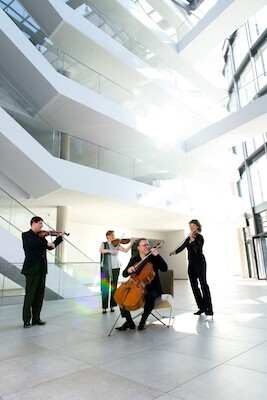
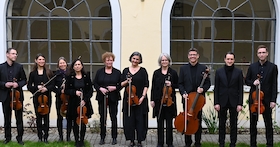
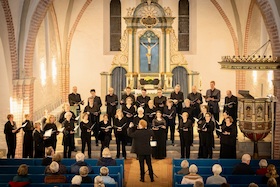
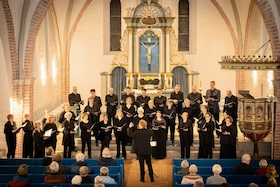
Die ElztalSinfonietta Freiburg wurde unter Prof. Schweizer mit dem Ehepaar Daxer im Dezember 2002 in Freiburg gegründet, um ein Ensemble zu schaffen, das in verschiedenen kammermusikalischen Besetzungen sowie als Sinfonieorchester auftritt und sich durch musikalische Flexibilität mit großer professioneller Gestaltungkraft auszeichnet. Das Orchester besteht überwiegend aus freischaffenden, professionellen Musikern, allesamt erfahren in barocker/historischer Aufführungspraxis. Es folgten Projekte u.a. im Rahmen der Glottertäler und Staufener Horntage, in der Städtischen und Kirchlichen Konzertreihe Gengenbachs, sowie in Zusammenarbeit mit Chören aus der Region (u.a. Freiburger Kammerchor) und Konzerte im überregionalen Raum.
Die musikalische Leitung hatte seit Gründung des Orchesters bis 2012 Herr Prof. Rolf Schweizer. Lukas Grimm übernahm seither die künstlerische Leitung des Orchesters.
Lukas Grimm (*1986) studierte Kirchenmusik und Orgelimprovisation an der Staatlichen Hochschule für Musik und Darstellende Kunst Stuttgart. Nach seinen Master-Degrees schloss er ein Studium der Orchesterleitung an der Musikhochschule Karlsruhe an, welches er im April 2014 mit Auszeichnung beenden konnte. Als Dirigent arbeitete und konzertierte Lukas Grimm bereits mit den Stuttgarter Philharmonikern, der Philharmonie Baden-Baden, dem RIAS-Kammerchor, sowie den Chören des NDR und MDR. Engagements führten ihn u.a. zum Bundesjugendorchester, ans Badische Staatstheater Karlsruhe, sowie an die Volksschauspiele Ötigheim. Bei den Asien- und Europa-Tourneen 2018 und 2019 des Freiburger Barockorchesters übernahm Lukas Grimm für René Jacobs die Einstudierungen der Chöre vor Ort. Lukas Grimm ist seit 2013 künstlerischer Leiter des Freiburger Kammerchores und der ElztalSinfonietta Freiburg.
Copyright: Bertrand Bellin
Einlass: 19:00 Uhr

 Hallo, ich bin Maya.