Theaterreihe des Volksbildungsrings Bad Arolsen 2025/2026 - "Die Nashörner" - Schauspiel von Eugène Ionesco
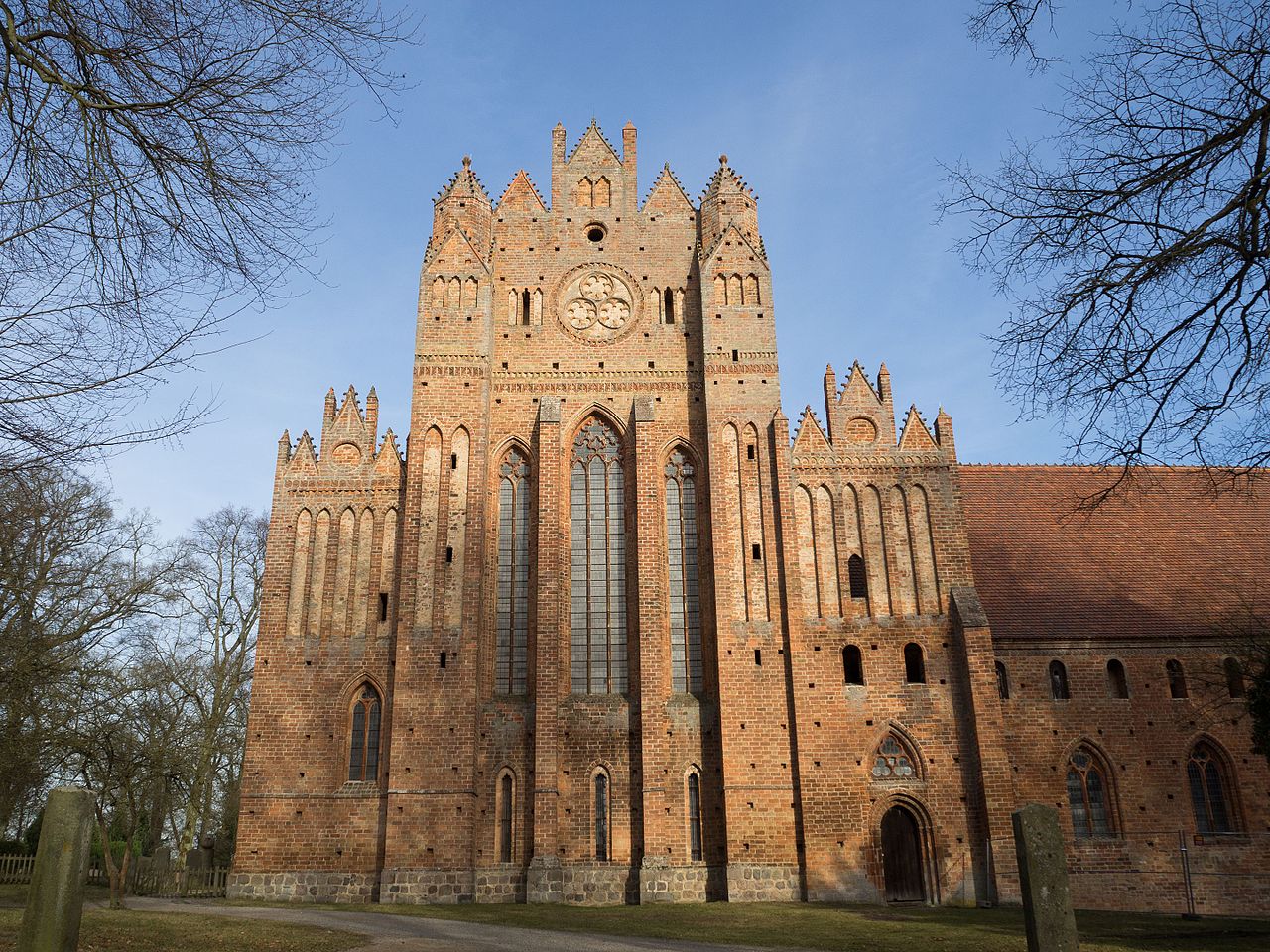
Sunday, November 9, 25 7:30 PM Fürstliche Reitbahn
Berliner Kriminaltheater
Ferdinand von Schirach, “Terror”
To prevent a terrorist from crashing a passenger plane he has hijacked into the fully occupied Allianz Arena, Bundeswehr pilot Lars Koch decides against orders to shoot down the passenger aircraft – 164 lives are taken to save 70,000.
The grand criminal chamber of the Berlin jury court is discussing whether Lars Koch can be found guilty of murder. The verdict is decided by the audience through a vote on the guilt or innocence of the accused, and thus also regarding the judge’s ruling.
Terror by Ferdinand von Schirach gains renewed urgency in the current times. The central moral question – is it permissible to sacrifice the lives of a few people to prevent a larger catastrophe? – remains highly relevant, especially in light of new threats such as drone wars, artificial intelligence in warfare, and increasing uncertainty due to geopolitical tensions.
The performance promises to be an exciting and gripping evening of theater.
Photo: (c) Herbert Schulze
Friday, November 21, 25 7:30 PM Fürstliche Reitbahn
Komödie am Altstadtpark Braunschweig
“The Gasthaus an der Themse” Criminal play based on Edgar Wallace
The most successful Edgar Wallace crime story premieres on stage in black and white for the first time!
A criminal is up to no good in London. The mysterious “Shark”, as he is called, robs banks and jewelers and does not shy away from murder. Equipped with diving gear and a harpoon, he shoots his victims in the back and then disappears into the city’s sewers. Inspector Wade of the River-Police is the only one hot on the trail of the "Shark", even Scotland Yard seems overwhelmed. Wade's investigations lead him repeatedly to the notorious "Mecca" of London's underworld, the inn on the Thames.
“Here speaks Edgar Wallace!” Who doesn't know this suspenseful and chilling phrase at the beginning of the Edgar Wallace films? For the first time worldwide, the most successful Edgar Wallace crime story is brought to the stage in an exciting, humorous, and wonderfully cast version, and to make the perfect nostalgic Wallace feeling complete, it’s also in black and white.
Absurd scenes, thrilling action, humorous dialogues, and more and more victims of the "Shark" make this theater evening the perfect entertainment. Dive into the nostalgic atmosphere of the “Gasthaus an der Themse”!
Photo: (c) Der Bildbauer
Sunday, December 7, 25 7:30 PM Fürstliche Reitbahn
"Goethe - Werther - Eisermann"
Andre Eisermann and Jakob Vinje
Spoken Word Performance - Reloaded
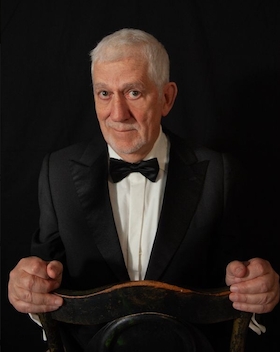
It all began in 1999 in Wetzlar: For the reopening of the Lotte House, the childhood home of Charlotte Buff, to whom Goethe dedicated a literary monument in Werther, actor André Eisermann was asked to read from "The Sorrows of Young Werther". Together with pianist and composer Jakob Vinje, Eisermann developed a Spoken Word Performance for Goethe's Storm and Stress masterpiece: Over Vinje's delicate compositions, Eisermann immerses himself in Werther's words and thoughts and in the unrequited feelings towards Lotte. Through Eisermann's interpretation, Goethe's words come alive, and one thing becomes clear: Love, and the suffering from it, is a timeless matter.
Originally planned as a one-time event, the performance of the multi-award-winning Kaspar Hauser actor became a hit with the audience: Eisermann and Vinje have performed their program more than 800 times over the past years and published an audiobook with BMG Wort.
Photo: (c) Fabian Hans
Sunday, February 1, 26 7:30 PM Fürstliche Reitbahn
Theater Poetenpack Potsdam
“Jugend ohne Gott” Ödön von Horvath (1901-1938)
“Jugend ohne Gott” is a reflection from the internal perspective of the Third Reich. In it, Horváth processes his own experiences from the years 1933 to 1937. It provides an insight into Germany before the start of World War II and the repressions and mechanisms of adaptation. With his choice of an intellectual as the protagonist and the depiction of his inner world, he facilitates self-reflection on one’s own biography. All the other characters stem from bourgeois backgrounds, allowing him to depict the socio-economic constraints under which the middle class stood. They saw their chance of advancement in adapting to the regime and its propaganda.
Ödön von Horváth's work ultimately highlights that fear and adaptation compromise human integrity by leading individuals to act against their own convictions. However, Horváth also presents another option: resistance. Thus, “Jugend ohne Gott” offers an examination of how it is possible to destroy integrity through adaptation to a totalitarian system but also how the courage to confront this system helps restore integrity.
Aren't these very current questions?
Photo: (c) Andreas Hueck
Sunday, March 8, 26 7:30 PM Fürstliche Reitbahn
Neues Globe-Theater Potsdam
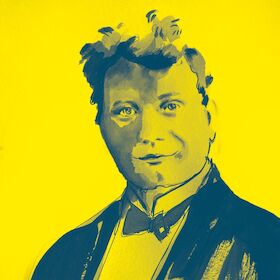
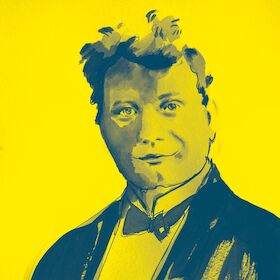
“Mephisto” Play with music based on a novel by Klaus Mann (1806-1949)
Mephisto, written in exile in 1936, is regarded as a key novel about the actor Gustaf Gründgens. However, according to Mann, “it is not a portrait but a symbolic type”: An actor in conflict between career and conscience. The film adaptation with Klaus-Maria Brandauer won the Oscar for Best Foreign Language Film in 1981. The (fictitious) story is told of the actor Hendrik Höfgen, from 1926 at the Hamburg Artist Theatre to 1936, when he has become the celebrated star of the so-called Third Reich and is appointed director of the Berlin State Theater.
Höfgen, who only later comes to terms with the powers of the National Socialists, initially flees to Paris. However, Lotte Lindenthal, the wife of the “flying general” and prime minister, wishes to have Höfgen as her partner for her Berlin debut at the state theater and persuades her husband, “the fat one”, to bring Höfgen back to Berlin. As a passionate actor, the role of Mephisto in Goethe's Faust fits him like a glove, but opportunist Höfgen only realizes too late that he has indeed made a pact with the devil. In the end, Hendrik has become an “ape of power”. An actor torn between career and conscience, culminating in the famous line: “I am just an ordinary actor!”
Photo: (c) Neues Globe Theater Potsdam
Sunday, April 19, 2026 7:30 PM Fürstliche Reitbahn
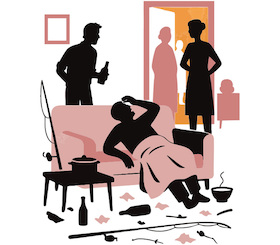
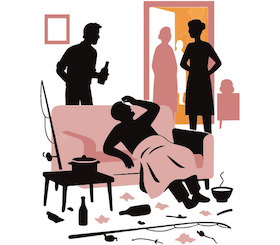
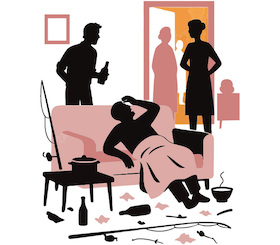
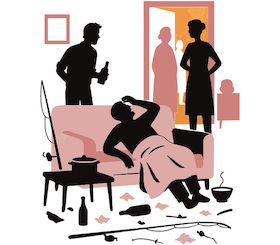
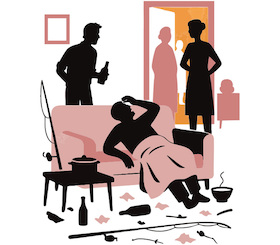
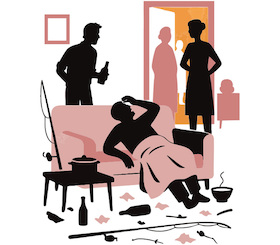
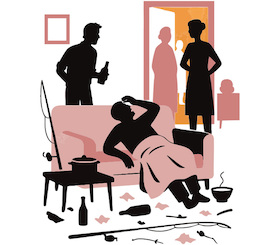
Die Nashörner, a play in three acts by Eugène Ionesco (1909-1994)
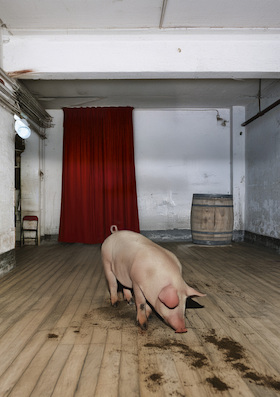
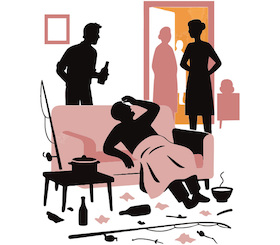
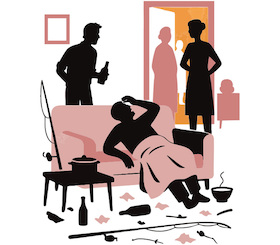
Friends Bérenger and Jean are sitting on a café terrace chatting on a Sunday afternoon when suddenly a rhinoceros storms through the square. While all those present discuss the incident in amazement and horror, only Bérenger remains unaffected. Also the next day in the office, there is a heated argument about the event – until Madame Boeuf bursts in, submitting her husband's sick note and breathlessly reports that a rhinoceros followed her. Soon this rhinoceros comes rushing up the stairs and is identified by Madame Boeuf as her husband. Gradually, more and more residents of the provincial town transform into angry beasts. And suddenly, they are in the majority. Anyone who wants to belong also transforms – “one must move with the times” after all.
Ionesco shows in his work how individuals can influence groups and even nations with absurd logic and lead them to inhumane behavior. He denounces the large mass of nonconformists who follow the mainstream without criticism and laments every kind of stupidity that ultimately leads to ruthless opportunism and the erosion of democracy.
Eugène Ionesco's play is an absurdly comic yet bitterly malicious parable about the madness of ideological mass movements.
Photo: (c) pixel creator / shutterstock.com
An introduction to Ionesco's play will be given by the chairman of the VBR, Wilfried Schuppe, on Thursday, April 16, 26, at 7:00 PM in the small hall of the Bürgerhaus Bad Arolsen. Admission is free. Since the premiere won’t take place until March 26, there are no scene pictures yet.
Entrance: 7:30 PM